Εμφάνιση αναρτήσεων με ετικέτα Παιδαγωγικά. Εμφάνιση όλων των αναρτήσεων
Εμφάνιση αναρτήσεων με ετικέτα Παιδαγωγικά. Εμφάνιση όλων των αναρτήσεων
Παρασκευή 7 Φεβρουαρίου 2020

Δευτέρα 27 Ιανουαρίου 2020
Δευτέρα 6 Ιανουαρίου 2020

Τετάρτη 18 Δεκεμβρίου 2019
Αποφοίτηση από το σχολείο: βουλές και συμβουλές!
Five things I wish I knew when I left school

Dear class of 2016,
Finishing school can be a daunting experience but you are young, bright and have your future ahead of you — easy for me to say, you might think.
I could fill a book with the things I wish I’d known when I left school – how to iron, how to put up a shelf, how invaluable learning languages is. Though the biggest one is how everyone is in the same boat, and how no one really knows what they want to do when they leave school.
So, with this in mind, let me impart some of my age old wisdom onto your young shoulders. Here are some of the most important life lessons I wish somebody had taught me before the final school bell rang.
1. Make your own decisions
When you open the exam results envelope don’t put pressure on yourself to make a decision straight away. Take time to think and plan. I wish I hadn’t been so influenced by what my peers were doing and what direction people thought I should take and actually took the time to listen to my own heart.
I was being pushed by teachers, friends and family to study medicine, but I knew I wanted to study more fundamental aspects of science than that. It took months of thinking to know exactly what it was that interested me most.

Whatever your exam results may be, you are turning the page of a new chapter – an exciting, and as yet unscripted story. Make sure you enjoy this period. While everything may seem a bit up in the air, it is likely you will look back on your school leaving as one of the best periods of your life, before the realities of everyday life and paying bills come into play.
2. Manage your money
On the topic of bills, the ability to manage money is one of the most valuable practical life skills you’ll ever need – yet when I left school, I knew way more about Shakespeare and Aristotle than how to budget money and pay household bills.
In school, I was blissfully unaware of how to financially navigate the real world – I had to work this out for myself. APR, insurance and overdrafts were like a foreign language to me, and it seems I was not alone. According to a recent study, more than a third of people wish there had been lessons in school on how to budget, a further third would have appreciated classes on the importance of insurance.

It’s amazing the number of times negotiation is needed in our lives, from buying a car, negotiating our salary, or trying to get a better deal on your household bills. Many schools have debate teams, but negotiation is something you won’t find in any textbooks. It’s something we learn and become better at as life progresses. My advice would be don’t be afraid to ask for help or guidance and use resources at hand, such as career centres and money saving websites.
3. Make the most of your time
I wish that before I left school somebody had told me to stop worrying about what the future held and to make the most of the present time. One tip I would give to school leavers is to use summer holidays and spare time wisely. Research has shown that students who have a gap year achieve more highly at university than students who enter university straight after school and mature age students. So do something you’ve never done before - whether that’s volunteering, a work placement or travelling to a new continent.

Having worked in a number of different countries it is true, travel really does broaden the mind. Do something that will enrich your life and that will take you out of your comfort zone. Employers will always look favourably on the efforts taken by go getters who have gone out and done work experience. Work experience or volunteering is a great way to network and exposes you to a range of core workplace activities, including teamwork, communication skills and how to use your initiative.
4. Don’t give up
If I could give my 17-year-old self any piece of advice over and over again it would be not to be scared of rejection. Life is full of rejections, be they personal (God knows, I’ve had a few), educational or professional.
Getting job rejections can be emotionally difficult and frustrating but it can also be a useful springboard to reassess your goals. There are many different pathways to get to the same destination. Missing out on grades, a course, or a job, doesn’t mean the dream is over. You can look at alternative pathways.

If you don’t have the necessary experience or the right grades, perhaps think about going through clearing, doing an internship or gaining experience by work shadowing. Don’t give up at the first hurdle and remain positive. After all, Leonardo DiCaprio didn’t win his long-awaited first Oscar by giving up.
5. Never stop learning
When I left school I thought that was the end of homework. How wrong I was. Education doesn’t stop after school. As former US Secretary of War, Newton D. Baker, said: “The man who graduates today and stops learning tomorrow, is uneducated the day after.” Never stop learning, class of 2016, treat every day as another school day.

And with all that in mind, I wish you good luck for the rest of your adventures in this little thing we call life!
Δευτέρα 28 Οκτωβρίου 2019
Πέμπτη 5 Σεπτεμβρίου 2019
Happy Schools....
https://theconversation.com/schools-could-teach-children-how-to-be-happy-but-they-foster-competition-instead-121669
Schools could teach children how to be happy – but they foster competition instead
Diagnoses of mental disorders and drug prescriptions among school-age children have skyrocketed over the last two decades. The World Health Organisation (WHO) reports that 20% of children experience mental disorders – such as depression, anxiety and ADHD – at any given time.
This is a significant problem in the UK, where one in eight children between the ages of five and 19 has been diagnosed with an emotional or behavioural disorder. Even children as young as five are getting ill: according to the latest reports, 6% of five year olds suffer from a mental disorder. The challenges are greater still for children from low income families, who are four times more likely to develop mental health problems than their better off peers.
While home life, friends, social media and body image all have an impact on the mental health of children, a recent report from The Children’s Society found that more young people feel unhappy about school than any other area of their lives. Yet a growing body of research from around the world shows that schools can actually help children lead happier lives – if they value such outcomes.
Under pressure
Generally speaking, the UK’s education system – like many others around the world – is geared toward competition. International rankings such as OECD’s Programme for International Student Assessment (PISA) rate the performance of schools, placing pressure on governors, teachers and pupils. As a result, schools seem to value the academic achievement of students over their mental health and well-being, which is reflected not only in the way students are taught, but also how they are assessed.
Teachers also face a lot of pressure to ensure their students obtain the highest grades possible. This is also contributing to poor mental health among teachers, with many developing mental health problems such as burnout, which negatively impacts their performance and can ultimately lead them to quit the profession.

While there are requirements for UK schools to teach pupils how to stay physically and mentally healthy, it’s clearly not enough. All too often, academic demands on pupils provoke a sense of rivalry, rather than teaching them how to enjoy life and cultivate positive emotions. Yet educational performance does not need to come at the cost of children’s happiness and well-being.
Education systems, including the UK’s, have the capacity to respond to the growing mental health crisis among children. And research shows that promoting mental health and well-being in schools, on a par with core skills such as maths and literacy, has a positive impact on the self-esteem, academic achievement, social relations, motivation and career prospects of pupils.
The Nordic way
To see how schools can teach pupils to be happy, consider the education systems of some of the happiest countries in the world. For instance, all five of the Nordic countries – Denmark, Norway, Sweden, Finland and Iceland – appear in the top ten happiest countries, according to the World Happiness Report.
It’s well known that Nordic countries place a greater emphasis on social-emotional learning, which gives children the skills and knowledge to recognise and manage emotions in effectively. This forms the basis of well-being, and can significantly improve academic achievement among students.
Nordic countries also value the judgements of teachers over national examinations, and schools are not rated or ranked as they are in the UK or US. This prevents the education system from placing needless pressure on schools, leading to less rivalry, stress and anxiety among students, and lower rates of burnout among teachers.
Finding happiness
When it comes to being healthy and happy, research suggests that money only matters to a certain extent. What matters most is developing self-knowledge – that is, knowing how you think, behave and manage your own emotions – and positive social relationships. This is evident in some Latin American countries. For example, Costa Rica and Mexico also score well on the World Happiness Index, and rank among the happiest countries according to the Happy Planet Index (which takes into account well-being, life expectancy and inequality, as well as ecological footprint).
These nations have a culture of promoting social networks of friends, families and neighbourhoods. Despite living on the most unequal continent in the world, research indicates that Latin American people are extremely resilient, meaning they have the ability to successfully overcome adversity and enjoy life in spite of difficult circumstances.
According to recent UN reports, schools in Latin America are also doing a good job in promoting resilience among children. Environmental sustainability is also a key part of education policies in places like Costa Rica. This promotes empathy toward other members of the society – a core skill of social-emotional learning.
My own research has found that education systems in both developing and developed countries value forming responsible citizens through valuing equality, harmony and diversity among others. Yet none of the countries included in the analysis – China, England, Mexico and Spain – seem to place an explicit value on mental health in their education systems.
Education systems around the world can tackle the mental health crisis among children – if they set out to do so. And countries that prioritise children’s happiness and well-being offer a strong starting point. By promoting positive relationships over rivalry, and learning over league tables, children around the world can be given the chance to flourish.
Τετάρτη 30 Ιανουαρίου 2019
Παρασκευή 21 Δεκεμβρίου 2018
H επαναστατικότητα διδάσκεται;
https://theconversation.com/teaching-students-how-to-dissent-is-part-of-democracy-93046
Teaching students how to dissent is part of democracy
In scenes unprecedented in previous school shootings, the past few weeks have been marked by students taking to the streets, to the media, to corporations and elected officials in protest over gun practices and policies.
What schools should do
Dissent is an American tradition
Teaching students how to dissent is part of democracy
Responses to these teens have been mixed. Some have celebrated their passion. Some concluded that the students are immature and don’t yet fully grasp longstanding issues with the Second Amendment. Some questioned the voices and perspectives of the teens. Still others see the protests as an inappropriate use of time that might be better spent reaching out to loner students who may be prone to future acts of violence.
Some schools have even threatened to take disciplinary action against students for engaging in protests during school hours. This has prompted universities like my own to promise students that disciplinary actions that stem from peaceful protest will not be held against them when they seek college admission.
What schools should do
Immediately after the Parkland shootings, some scholars urged society to consider “the nature of
education and schooling in American society.”Indeed, we need an educational response to the shootings. This response should account for the purposes of our schools within American democracy and offer students opportunities to learn, even in the face of tragedy. As the author of a new book on how schools can get students to become more civically engaged, and a 2012 book on how schools can cultivate the skills necessary for political dissent, I contend that the student protesters that have emerged in the wake of the Parkland shooting offer insight into a worthwhile response.
While seldom acknowledged, students have a right to engage in political dissent and, more significantly, the entitlement to an education that nurtures their ability to do so. In the 1969 landmark
Tinker case, the Supreme Court ruled that students do not “shed their constitutional rights to freedom of speech or expression at the schoolhouse gate.” But, the court held, it is reasonable to limit protest activities that interfere with the opportunity for others to learn. The right to dissent is not explicitly stated in the Constitution, but rather is a civil right that arises out of how we understand good citizenship and thriving democracy. Dissent allows for a proliferation of views on the good life. It sparks conversation and ignites change to better align practices and policies with the wishes and needs of the people. It keeps democracy vibrant.
Dissent is an American tradition
Often, we think of student protest as a type of public self-expression that should not be hindered as long as it meets certain criteria, like not preventing other children from learning. In America, our democracy requires the consent of the
governed. Our Declaration of Independence even says that when we are not in agreement or when our well-being is in jeopardy, we have a duty to speak up. It’s the American way and has been from the time the nation began.
It is only with the opportunity and capacity to dissent that we can determine if our laws and systems guiding us are good or just. Further, in order to invoke our right to dissent, citizens have to know how to dissent, which calls into play the role of schooling.
As a scholar in the philosophy of education, I would argue that our children, as burgeoning citizens, are entitled to such an education in our schools.
There, they should learn the skills of dissent, including consciousness-raising, coalition building, persuasion, public demonstration and pursuit of traditional government avenues for change. This type of instruction is happening in some schools, but not systematically enough across all schools, as courses in civics and social studies have been cut in order to focus on testing and such. Students receive even less of this kind of instruction in poorer schools.
And, our students must learn about the responsibilities of citizenship that correlate with their right to dissent. This includes learning how to evaluate the justice of laws, how to distinguish effective dissent from simple rabble-rousing, and how to protest in ways that do not unduly infringe on others.
Teaching children how to dissent in response to a violent situation that they feel threatens their well-being is aligned with the purposes of democratic schooling. Indeed, a flourishing democracy depends on such an informed and active citizenry who will speak out when they find laws to be unjust.
Τρίτη 17 Ιουλίου 2018
Social farming: τα μυστικά της...φύσης
https://theconversation.com/how-farms-can-help-improve-the-lives-of-disadvantaged-young-people-97887
https://www.carefarminguk.org/care-farming-explained
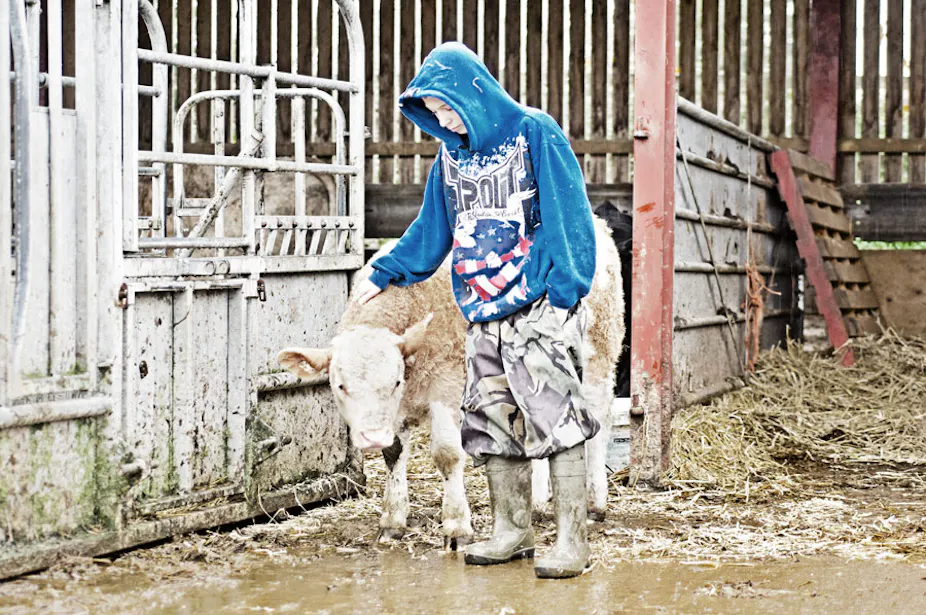
How farms can help improve the lives of disadvantaged young people
Παρασκευή 4 Μαΐου 2018


Τετάρτη 25 Απριλίου 2018
Τετάρτη 7 Φεβρουαρίου 2018
O σαρκασμός και η ειρωνεία ως παιδαγωγικά μέσα: δίκοπο μαχαίρι

https://theconversation.com/why-sarcasm-is-such-a-brilliantly-inclusive-and-effective-way-to-teach-children-not-90635
Why sarcasm is such a brilliantly inclusive and effective way to teach children – not
The image of the sarcastic teacher is a common one. From the masterful speech given by Socrates at his trial for corruption (his “apology”), to the withering insults of Mr Gilbert on The Inbetweeners TV show, sarcasm and teachers seem inextricably linked.
Ignoring advice from handbooks and manuals, in my own work as a teacher I have often used sarcasm to highlight rule breaking (“Late again, Timmy? What was it this time, alien abduction or a volcano in your garden?”) or challenge misunderstandings (“Oh yes, absolutely, clouds are definitely 100% made by steam from kettles”). And some believe that I was right to do so.
A recent essay in the Times Educational Supplement referenced a studythat argued that sarcasm from trusted people “increases creativity without elevating conflict” and can act as a useful teaching method.
The teacher who wrote that essay said in a subsequent interview that sarcasm is one of many tools available to improve creativity in science lessons. But it is a conclusion I have some trouble accepting.
On a basic level, sarcastic comments are more difficult to understandthan plainly spoken phrases. This would suggest that the use of sarcasm impedes learning rather than improving it.
And aside from the pro-sarcasm stance being based on just one or twostudies, there are other significant issues surrounding its use as a teaching tool. First, it’s not for children and, second, it’s discriminatory.
Not suitable for children
The studies around sarcasm and creativity use participants aged 18-69. Unlike adults, who can discern sarcasm from context, children rely heavily on intonation to verify ironic suggestions or humorous exaggeration.
If sarcasm isn’t identified by the “recipient” then it can seem misleading at best, cruel or damaging at worst. A study in South African schoolsconcluded that sarcasm could be “a direct violation of fundamental rights of learners to dignity”, akin to corporal punishment. One teachersuggested that “sarcasm can be as destructive and painful as other forms of humour can be rejuvenating”.
There is some suggestion that millennials may be particularly sensitive to sarcasm, and a negative interpretation may damage trust and create obstacles between “juniors” and those in positions of power.
The risk of damaging the pupil-teacher relationship is particularly high for teachers new to the profession, or those taking on new classes, since a lack of familiarity with the speaker makes sarcasm more likely to go undetected.
If sarcastic comments are undetected as humour, and subsequently interpreted as a true statement, then misunderstandings will abound.
School classrooms, labs, and workshops are inclusive places, where learners with different backgrounds and needs work in the same space. This variety makes sarcasm a questionable tool. Students with English as an additional language may struggle to either understand sarcasm due to a language barrier, or see sarcasm as wholly negative due to cultural differences.
People with learning disorders find it difficult to recognise and interpret sarcasm. An inability to understand a sarcastic situation has been seen in children with high-functioning developmental disorders, and children with ADHD have demonstrated specific deficits in comprehending paradoxical sarcasm.
If sarcasm is used in inclusive environments such as schools, teachers run the risk of communicating in a way that is alienating, misleading, or insulting.
Oh, so you think sarcasm is utterly evil…
Despite the many pitfalls, there may be positives to a careful use of sarcasm. Both using and receiving may indeed have a positive effect on creativity. In some cases sarcastic comments can serve as a “hook” to help people remember a particular fact or lesson. Where students “get” a teacher’s comments, it strengthens relationships.
This would be particularly true for older students. Their brains have a more developed prefrontal cortex, which is an essential part of understanding and interpretation of sarcasm. In certain circumstances, sarcastic teacher comments are revered, and collected to be shared more widely.
Like much in education, the use of sarcasm in the classroom seems to be something of a double-edged sword. Sure, it may stimulate creativity and strengthen existing relationships, but it may also lead to feelings of exclusion. Given the minefield that a use of sarcasm presents, and range of safer ways in which creativity may be encouraged in science, my feeling is that giving in to sarcastic tendencies is probably best avoided.
So if you want to use sarcasm to improve creativity in education, go right ahead. I can’t see that causing any problems for you at all …
Εγγραφή σε:
Αναρτήσεις (Atom)